

The Complete Guide to Developing Your Palate
What 11 weeks taught me about how taste actually develops

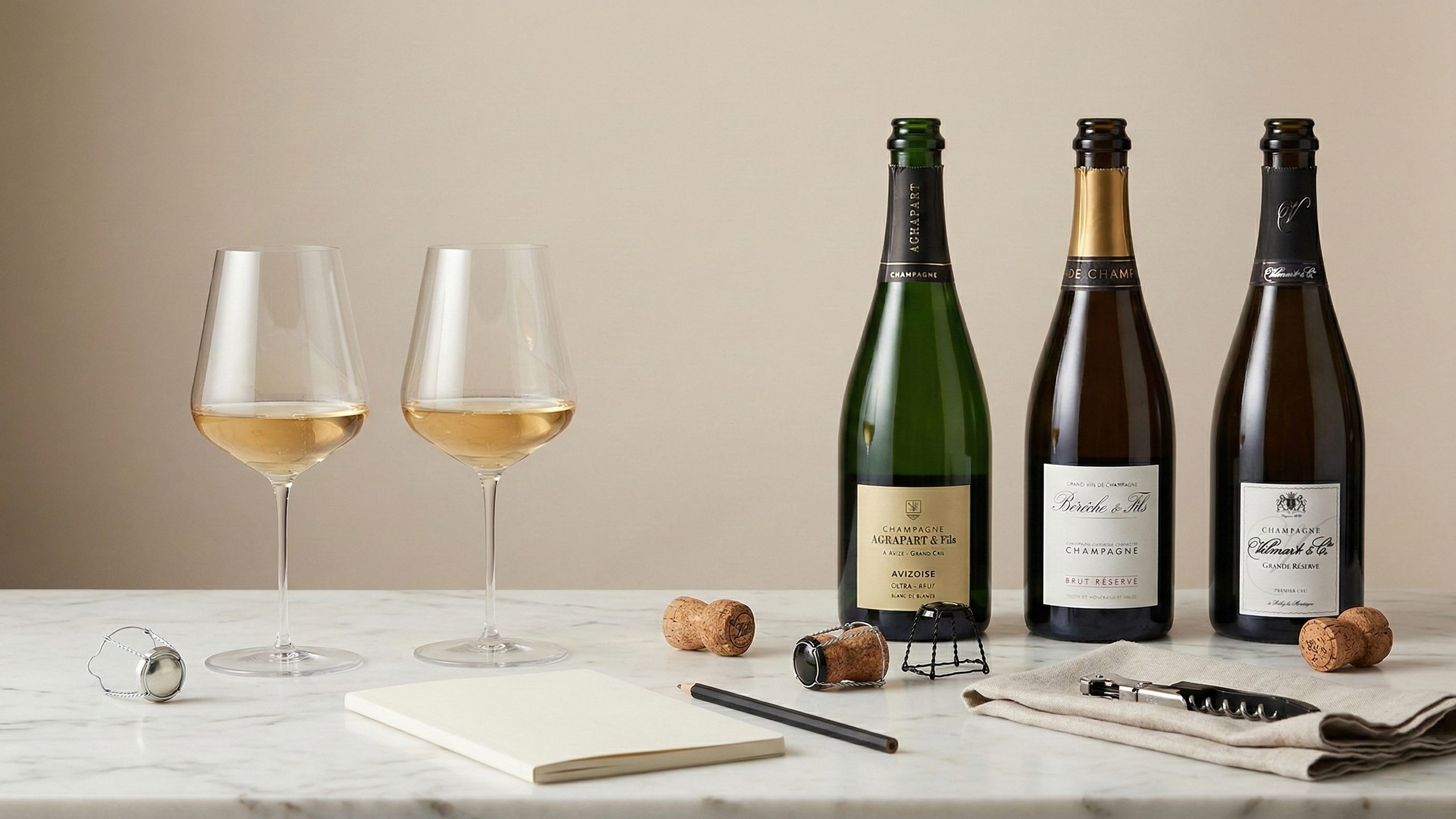
Welcome to issue #040 of The Polished Palate. Each week, I help you develop your own taste and drink with confidence; no sommelier certification required.
1 Big Idea
The Resonance Method is 12 weeks old. Not the practice; I’ve been developing my palate this way for over a decade. But the framework itself, the five-stage structure I’ve been writing about since January, is new. I’m figuring it out in public.
Some parts are clear now. Exposure to range matters. Noticing what resonates is more important than analyzing components. Curiosity accelerates learning faster than any curriculum. Language clarifies values. The skill transfers beyond wine.
But the edges are still messy.
I don’t know how long each stage takes. I’m not sure they’re truly discrete. They overlap, recur, deepen over time in ways I’m still mapping. And I don’t have a clean answer for someone who’s deeply stuck in borrowed taste, deferring to critics for every bottle, their own perception buried under years of external validation.
What I do have: 15+ years of lived experience as a sommelier, a growing body of evidence from sensory science that validates the core pattern (Isabelle Lesschaeve’s 30+ years of research on comparative tasting methodology aligns surprisingly well with what I’ve been seeing from the practitioner side), and feedback from readers who are testing this framework themselves.
This isn’t “here’s what I taught you.” It’s “here’s what we’ve learned together, and where I’m still working it out.”
Q1 in 12 Lines
Here’s what we covered, issue by issue:
Week 1: Context changes everything you taste
Week 2: The acidity advantage — learning to perceive freshness
Week 3: The texture spectrum — the hidden skill
Week 4: The Palate Primer synthesized acidity, texture, and body into working vocabulary.
Week 5: Knowing what you value changes how you navigate everything.
Week 6: The Resonance Method; a framework for how discernment actually develops.
Week 7: Noticing resonance requires attention. You tuned into what pulls you back for another sip.
Week 10: Trusting your own palate is the real skill. Not memorization, not scores. Perception.
Week 11: Comparison compresses years of learning into months. Two wines, one variable, clear conclusion.
Each issue explored one aspect of how discernment develops. Together, they map the five stages of the Resonance Method.
The Five Stages of the Resonance Method
Stage 1: Exposure to Range
You can’t develop preference without experiencing contrast.
This sounds obvious until you examine how most people taste wine. We gravitate toward what we think we’ll like, avoid what we think we won’t, and end up with a narrow slice of the spectrum. Then we wonder why our palates don’t develop.
I made this mistake early. I thought I liked big, extracted reds like Napa Cabs, Aussie Shiraz, anything dense and fruit-forward. So that’s all I drank. My palate never expanded because I never gave it reason to.
The turning point came when a colleague forced me to blind taste six Pinot Noirs ranging from $50 Central Coast to $190 Premier Cru Burgundy. I expected the expensive one to taste “better.” Instead, I found myself reaching for the California Pinot. It had an energy the others lacked; it was brighter, more alive, less performed.
That tasting cracked something open. The issue wasn’t that I liked big reds. The issue was that I’d never tasted anything different enough to notice what I actually responded to.
What I’m seeing: Exposure to range is the foundation. Weeks 1-3 covered this in depth (context, acidity, texture). But I’m still refining how to explain the difference between passive exposure (drinking lots of wine) and active exposure (deliberately tasting contrast).
Where I’m stuck: How much range is enough? Is there a threshold where diminishing returns set in? I don’t know yet.
Stage 2: Notice Resonance
Most people skip this stage entirely. They jump from tasting to judgment without paying attention to their actual response.
Resonance is the pull; the thing that makes you go back for another sip. It’s pre-verbal, pre-intellectual, immediate. Your brain lights up before you have language for why. The problem is we’ve been trained to ignore it.
Wine education teaches us to taste “objectively”. To dissect the wine into components (acid, tannin, fruit, oak), evaluate it against a standard, assign a score. This approach treats your subjective response as noise to be eliminated rather than signal to be trusted.
But discernment is built on noticing what resonates. Not what should resonate. What actually does.
I remember tasting a highly-regarded maison’s Champagne at a trade event. On paper, it was technically impressive: precise, complex, well-balanced. But I felt nothing. It was like reading a well-researched article that didn’t have a point of view.
Then I tried a grower Champagne from Bérêche & Fils. Lower dosage, higher acidity, more expressive. One sip and I knew. That electric feeling in your chest when something clicks.
What I’m seeing: Neuroscience backs this up. Wine perception activates the brain’s reward circuitry, the same pathways involved in music and art. Your brain knows what it likes before your conscious mind catches up. The skill isn’t learning to analyze. It’s learning to notice.
Where I’m stuck: Some people don’t feel resonance clearly. Or they do, but they dismiss it because it doesn’t align with what “good wine” is supposed to be. I’m still figuring out how to help someone trust a signal they’ve been trained to ignore.
Stage 3: Follow Curiosity
Once you’ve noticed what resonates, go deeper on it. Not on what you “should” learn. On what pulls you.
This is the opposite of traditional wine education, which follows a fixed curriculum: start with major grapes, move to classic regions, progress through winemaking techniques in order. The assumption is that structured learning is superior to interest-led exploration.
But curiosity accelerates development faster than discipline ever will.
When that Bérêche Champagne resonated, I didn’t move on to the next wine on the tasting table. I bought three more bottles from the same producer. Then I found two other Grower Champagnes with similar profiles. I read about the philosophy behind lower dosage. I tasted Grande Marque Champagnes side by side with Grower styles and noticed the differences.
I went down the rabbit hole. And the rabbit hole taught me more in three weeks than two years of passive exposure ever had.
What I’m seeing: Curiosity-led learning feels like play. Curriculum-led learning feels like work. You learn faster when it feels like play. Week 6 (single-variable tasting) and Week 11 (comparison method) explored this directly.
Where I’m stuck: How do you follow curiosity when you don’t know where to start? If nothing resonates yet, what pulls you? I think the answer is “keep exposing yourself to range until something catches,” but that’s not a satisfying answer when someone’s been drinking wine for years and still feels nothing.
Stage 4: Articulate Values
At some point, resonance needs language. Not wine-speak. Not borrowed vocabulary from critics or sommeliers. Your own words for what you’re experiencing.
This stage is harder than it sounds. We’re conditioned to defer to expert terminology, to describe wines the way professionals do, to adopt the vocabulary before we’ve earned it through experience. The result: we sound like wine people without actually developing perceptual clarity.
I spent years describing wines as “elegant” or “structured” or “well-balanced” without understanding what those words meant in my mouth. They were placeholder terms — vague enough to sound competent, empty enough to mean nothing.
The shift came when I forced myself to stop using wine vocabulary entirely. No “minerality,” no “terroir,” no “finish.” Just plain language: “This wine grips my gums and makes my mouth feel dry.” “This one tastes like wet stones after rain.” “This one has a perfume that reminds me of my grandmother’s garden.”
Clumsy? Yes. Precise? Absolutely.
Once I had language grounded in my actual perception, the wine vocabulary started to mean something. “Tannin” became the thing that grips your gums. “Minerality” became that wet stone quality. “Finish” became how long the flavor stays after you swallow.
What I’m seeing: Articulation isn’t just description. It’s values clarification. When you name what you’re drawn to, you reveal what you care about. Your language maps your values. Week 8 (structure) and Week 9 (balance) were about building this vocabulary.
Where I’m stuck: Some people freeze when asked to describe a wine in their own words. They want the “right” answer. I’m still figuring out how to short-circuit that instinct and get people to trust their own language.
Stage 5: Apply Across Domains
Discernment isn’t wine-specific. It’s a meta-skill.
The perceptual clarity you develop through wine, like noticing subtle differences, trusting your response, and articulating preferences, transfers to everything else. Coffee, olive oil, design choices, how you spend your time, who you trust, etc.
Wine is just the vehicle. Self-authorship is the destination.
I started noticing this a few years in. My palate was developing, but so was everything else. I got pickier about restaurants. Not (completely) because I was snobbish, but because I’d trained myself to notice when something was careless or performed. I restructured my calendar around what energized me rather than what I thought I should do. I stopped reading books that felt obligatory and started following genuine interest.
The through-line: I’d learned to trust my own perception.
What I’m seeing: The philosopher Charles Taylor calls this “living from the inside out.” Most people live reactively; shaped by external pressures, borrowed opinions, social expectations. They defer to authority because they don’t trust their internal signal. Developing discernment through wine is practice for trusting that signal.
Where I’m stuck: This stage is the hardest to teach because it’s deeply personal. The transfer happens naturally for some people and not at all for others. I don’t know why yet. I’m watching for patterns.
3 Tasting Experiments
If you want to test what you’ve learned over the past 11 weeks, here are three experiments that span multiple stages.
Tasting 1: Range Exposure Test (Stages 1-2)
Objective: Prove to yourself that context and contrast change perception
How:
Taste a wine you think you know in three different contexts: alone, with food, and blind
OR: Taste three wines from the same grape but different regions or price points
Go back to Week 2 (acidity drill) or Week 3 (texture spectrum) and repeat the experiments with fresh bottles
What to Notice:
Does your perception shift with context?
Can you name three differences before you look at price tags?
Are you tasting for confirmation (validating what you think you like) or genuinely experiencing contrast?
This tests whether you’re building perceptual range or just reinforcing existing preferences.
Tasting 2: Resonance Check (Stages 2-3)
Objective: Notice your actual response vs. the “correct” response
How:
Pour two glasses of different wines
Taste one analytically: break it down into components (acid, tannin, fruit, oak), evaluate it like a critic would
Taste the other with only one question: does this pull me or not?
What to Notice:
Which mode feels more honest?
Do you trust your own reaction, or are you waiting for external validation?
Does one wine make you reach for another sip without thinking?
This tests whether you’re developing your own taste or deferring to borrowed taste.
Tasting 3: Articulation Test (Stages 4-5)
Objective: Name what you’re experiencing in your own words
How:
Pick a wine that resonated with you
Describe it in three sentences without using wine terminology
Then look at what you wrote: what does it reveal about what you value?
What to Notice:
Can you describe the wine without borrowing vocabulary?
Does your language reveal preferences you didn’t know you had?
If you had to explain this wine to someone who’s never tasted it, what would you say?
This tests whether you’re developing perceptual clarity or performing expertise.
What’s Next
Quarter Two starts next week. The theme shifts from foundations to application: winemaking decisions and how they shape what you taste.
We’ll explore oak, fermentation, minerality, balance, and the philosophy behind different production styles. The Resonance Method stays the same (exposure, resonance, curiosity, articulation, transfer) but the depth increases.
I’m also still refining the framework itself. Your feedback helps. When you reply to these emails, I read every word. The questions you ask, the places you get stuck, the moments when something clicks. All of that shapes where this goes.
This newsletter isn’t me delivering finished doctrine from above. It’s a working document. I’m figuring out how discernment actually develops, and you’re part of that process.
The Finish
The best wine advice I ever received came from a Master Sommelier who told me:
“Stop trying to taste like a professional. Professionals taste like professionals because they’ve spent 10,000 hours noticing what they notice. You’ll get there by doing the same thing, not by imitating the result.” Discernment is built through practice, not performance.
You don’t need to sound like a wine critic. You don’t need to impress anyone at a dinner party. You don’t need permission to trust your own perception.
You need exposure, attention, curiosity, language, and the willingness to let wine teach you something about yourself.
That’s The Resonance Method. Five stages. One goal: taste sovereignty.
Wine is the vehicle. Self-authorship is the destination.
Quick question before you go (one click - I’m genuinely curious) - which stage feels hardest right now:
Is it noticing what you actually like vs. what you think you should like?
Finding words to describe what you’re tasting?
Trusting your palate instead of deferring to experts?